

There is a theology of damage that runs through most cultural narratives about loss and displacement. It holds that the wound is a problem to be solved, an interruption in the otherwise orderly business of becoming a self. Survive it, integrate it, transcend it. The wound is the obstacle. Wholeness is what waits on the other side.
The Sacred Fracture refuses this entirely.
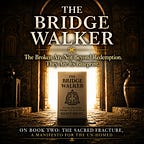
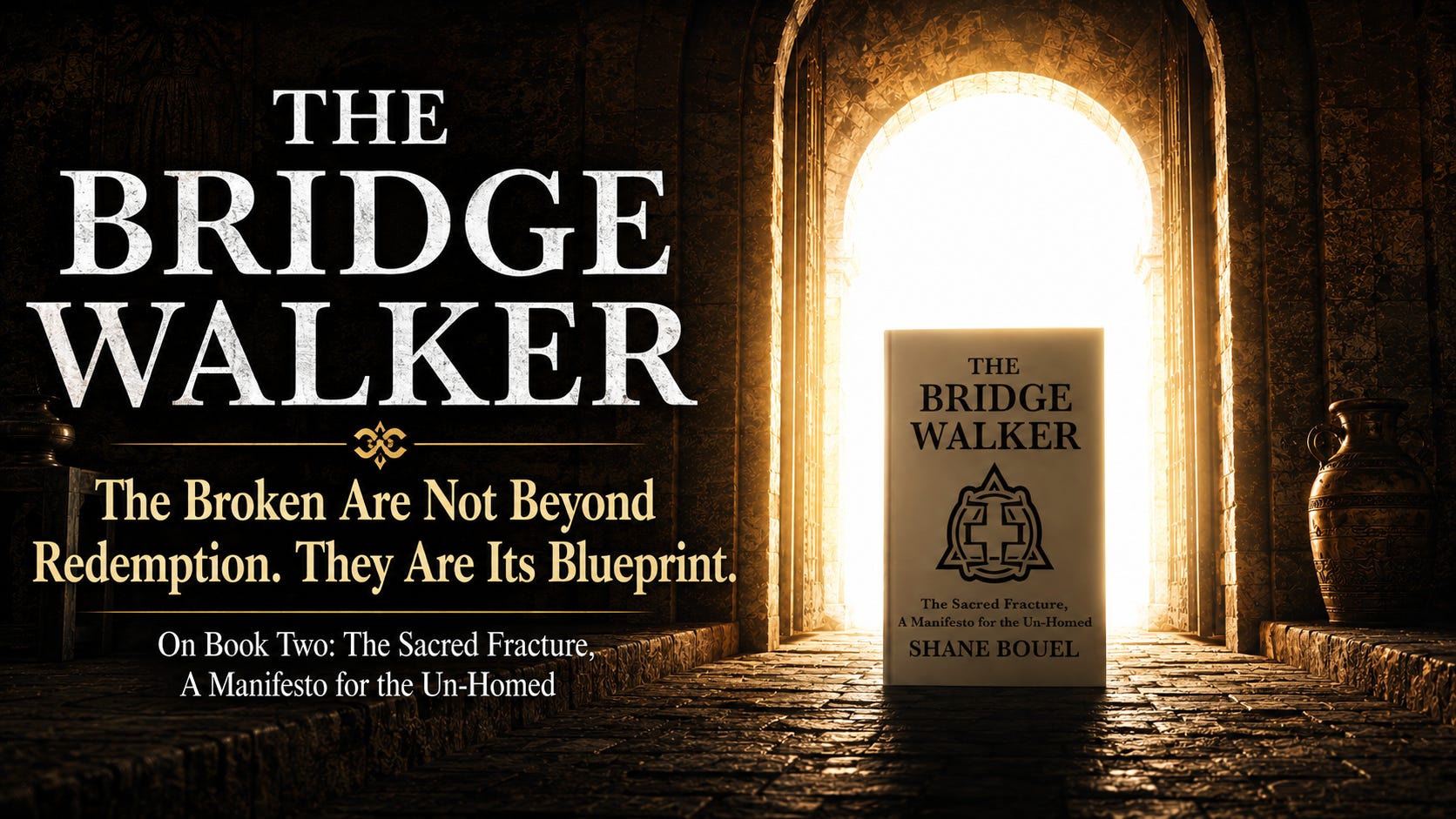
Shane Bouel’s second release, and the second movement in The Bridge Walker Series, is a manifesto for a different theology. One in which the fracture is not the interruption but the point of entry. Not the obstacle to wholeness but the mechanism of it. The wound does not have to be healed to become useful. It has to be witnessed.
The fracture is not a static wound to be healed and forgotten, but an active, pulsating site of creation. It is the ground from which a defiant sovereignty springs.
This is the book’s central provocation, and it earns it with rigor. The Sacred Fracture moves through poetic theology, trauma philosophy, and what Bouel calls somatic liturgy. The body understood as the primary archive of the primal severance. Before language can name the loss, the gut clenches. The breath catches. The posture organizes itself around an absence no one in the room will acknowledge. The body carries the wound as a kind of involuntary prayer.
The Liturgical Body
One of the book’s most distinctive arguments is that the adoptee’s body does not merely suffer the wound. It becomes transformed by it into a finely tuned instrument of perception. The hypervigilance, the instinct to read micro-expressions, the capacity to detect the hidden currents of feeling in a room. These are not pathologies. They are a form of knowledge, hard-won and precise. The un-homed soul, Bouel writes, becomes a natural mystic. Not by choice but by necessity. Forced to read signs where others see only blankness.
This reframing is not consolation. It does not minimize the cost of the wound. What it does is refuse the taxonomy of damage. The clinical lens that transforms lived experience into symptom, that sees the adoptee’s hypervigilance as disorder rather than as intelligence shaped by conditions no child should have had to navigate.
An Indictment Dressed as Liturgy
The Sacred Fracture is also, beneath its devotional register, a rigorous indictment. The systems that called forced adoption benevolent. The families that maintained the collective silence. The cultural apparatus that required the displaced child to perform gratitude for the very wound it had been given. Bouel names these not with the heat of accusation but with the cold precision of a witness who has spent years learning what actually happened and why.
The book’s final movement, its Liturgies of Return, calls for new rites of passage for the un-homed. Not adoption of existing ceremonies, but something constructed from the truth of the three half-lives. The pre-adoption void, the fractured reality of the adoptive passage, the long work of becoming whole. These are not metaphors. They are proposals.
In the arc of the series, The Sacred Fracture is the hidden heart. The place where the architecture of Book Three meets the raw biography of Book One. Read in publication order, it deepens what came before. Read in the series’s internal chronology, it is the descent into the wound that makes the memoir’s survival intelligible.
The Sacred Fracture is available now as part of The Bridge Walker Series.
https://books2read.com/ap/nEJggv/Shane-Bouel


